The question underneath the comparison
Don’t ask “who answers my phone?” Ask: “when a customer calls, does the call end with a booked job?” Every phone setup — voicemail, human service, AI — should be judged on that single outcome, because that’s the only one that shows up in revenue.
Voicemail: the polite way to lose a customer
Voicemail assumes a patient caller — and service-business callers, especially urgent ones, aren’t. Most hang up without leaving a message and dial the next company. Voicemail’s real function in a modern service business is telling you, the next morning, about jobs you already lost. Its only virtue is being free — which it isn’t, once you count what walks away.
Answering services: a human voice that can’t say yes
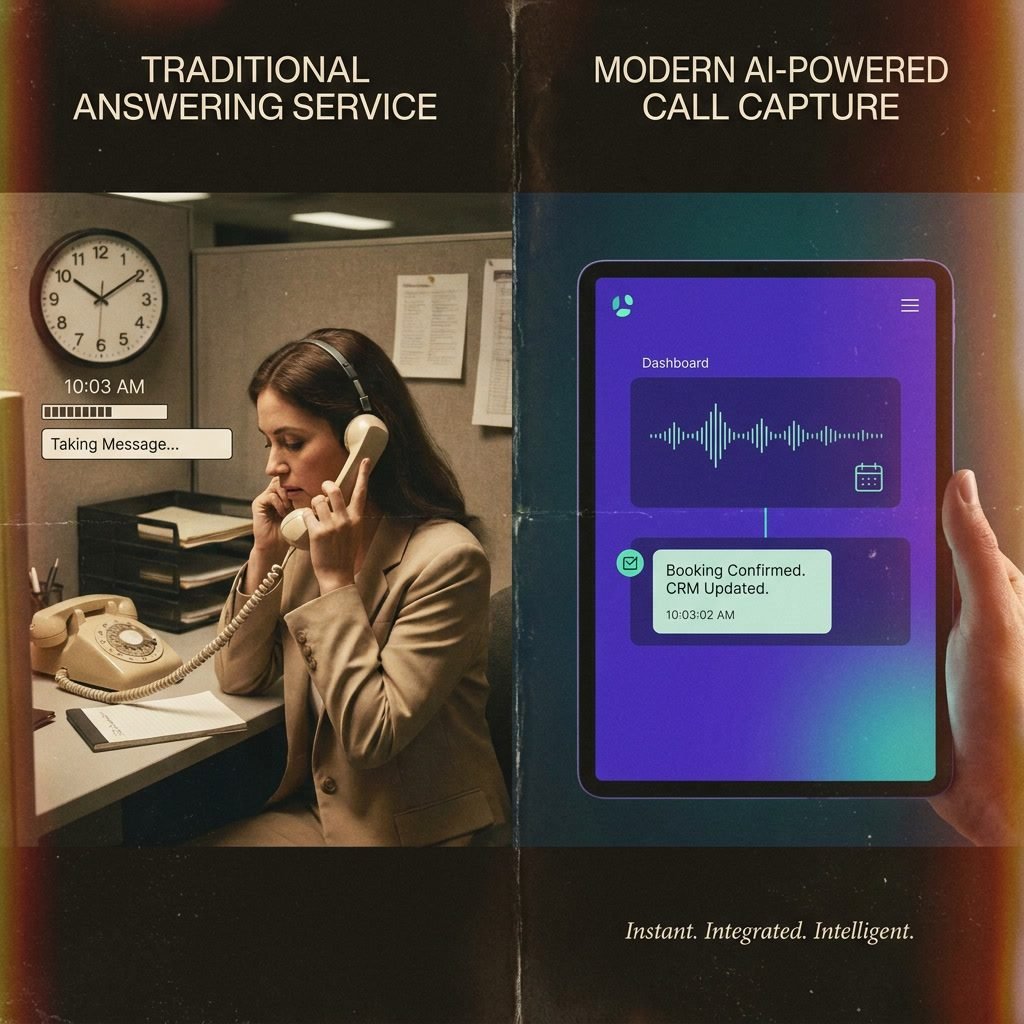
A traditional answering service solves the ring-out: a person picks up. But that person works from a script, doesn’t know your pricing, can’t tell a real emergency from an annoyance, and can’t see your calendar. The output is a message — “John called about his AC” — and the caller is back to waiting, and waiting callers keep shopping. You pay per call or per minute for the privilege, with surge nights (exactly when you need coverage most) driving the bill highest.
AI receptionist: answers like staff, scales like software
A modern Voice AI is trained on your business — services, pricing, service area, emergency rules — and speaks in a natural voice most callers can’t tell from a person. On a real call it does what your best CSR does:
- Answers instantly, every time — nights, weekends, holidays, and fifty simultaneous calls during a storm surge.
- Triages by your rules — the no-heat-with-a-baby call gets tonight’s dispatch; the mildly warm bedroom gets tomorrow’s slot.
- Quotes what you approve — trip fees, diagnostics, specials — and books straight into your calendar or dispatch board.
- Documents everything — every call transcribed, so you can read exactly how it represented you.
Cost structure is the quiet advantage: AI pricing doesn’t scale with call volume the way per-minute human services do — your busiest, most valuable nights are exactly when it’s cheapest relative to the alternative.
How to tell which one your business has outgrown
If you’ve ever heard “I called you first but you didn’t pick up” — you’ve outgrown voicemail. If your answering service’s messages regularly turn into “called back, already booked someone” — you’ve outgrown message-taking. The measurable version of this gut check is a free AI audit: it counts your missed and mishandled calls and prices the gap, so the comparison stops being philosophical and becomes arithmetic.